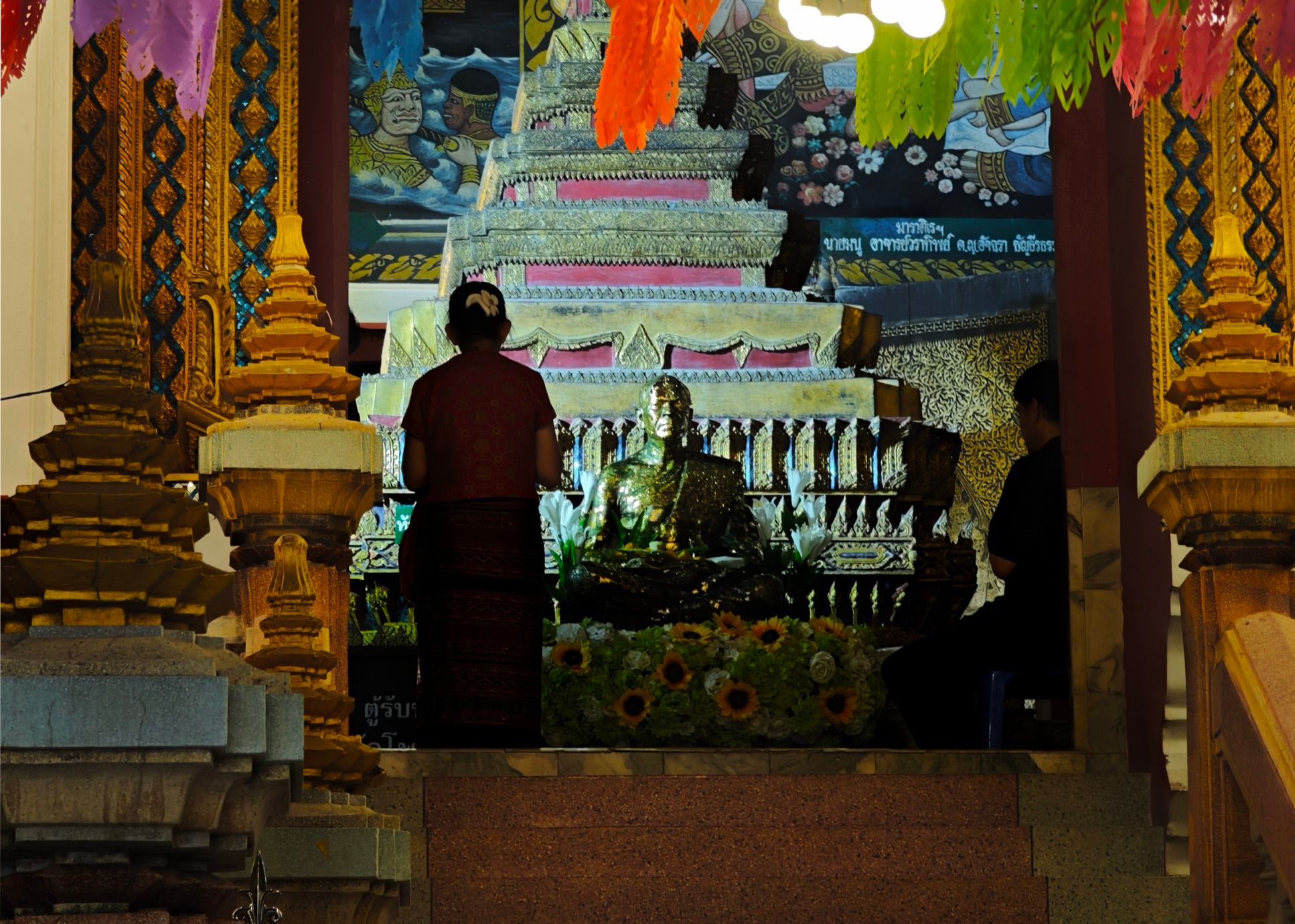
Hello everyone, happy March! (oops, late again!) This is my eighth blog post Iv’e written so far, and I think an interesting one too. February, the month I’ll spend most of my time describing here, had several very interesting ideas that I felt deserve somewhat of a thorough investigation. Some of you may find this interesting, others not, but I at a moment when many Thai people are thinking about the country’s future, I wanted to dedicate a whole section to my obsevations living here and a documantation on people’s thoughts and affairs. It’s also Chinese New Year, the biggest celebration of the year, in Nakhonsawan.
Chinese New Year
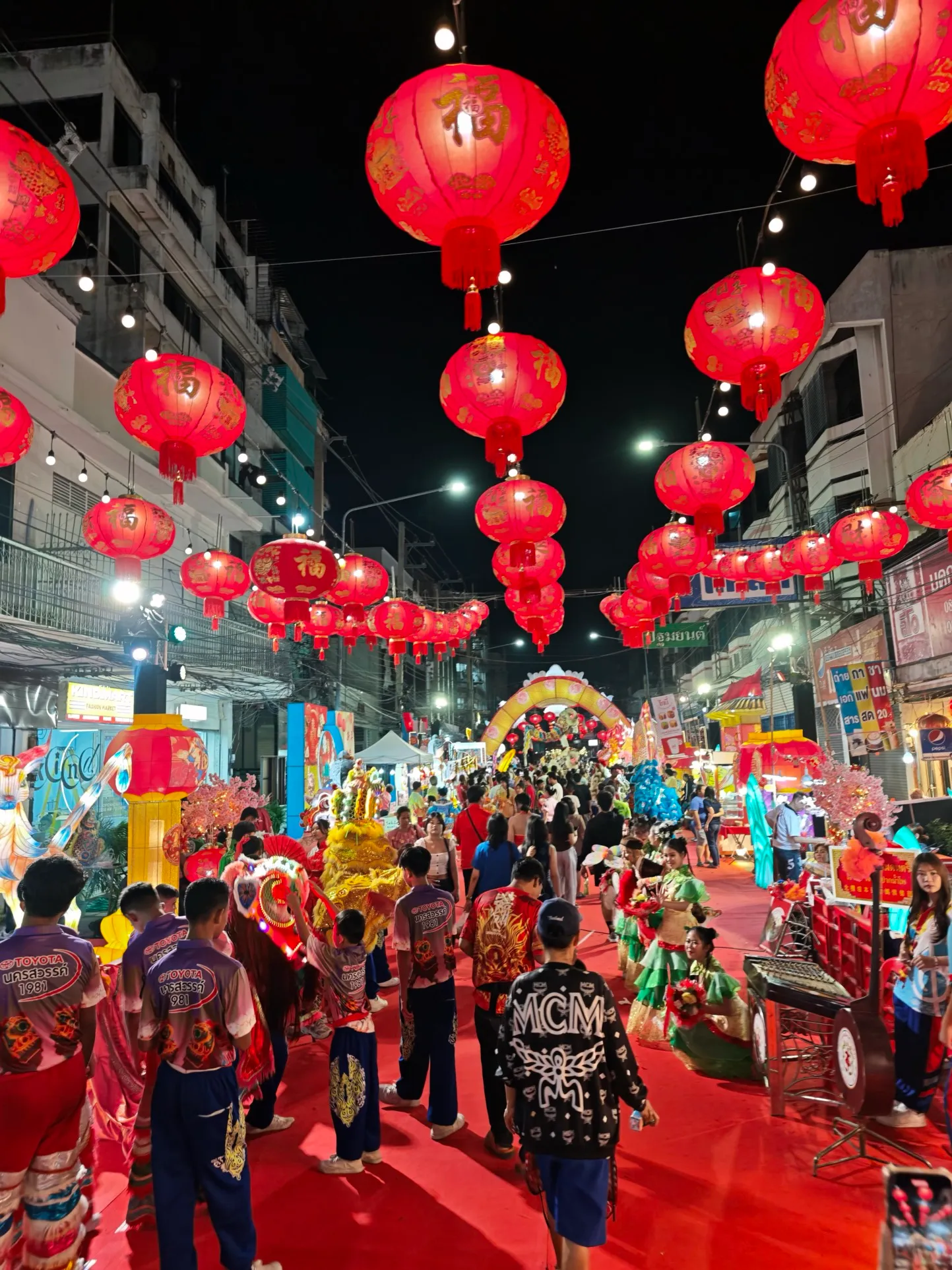
If Christmas is an aesthetic, and the Western New Year is a a few fireworks, the Chinese New Year in Nakhonsawan feels like an entirely different scale of celebration. It’s famous in all of Thailand, quite honestly. This city has one of the biggest events ever, and walking in the middle of it, that checks out. Basically everything for the festival was built and constructed only to be used for a few days then torn down. Someone told me that just setting up the stands cost something like 10 million baht, and whether or not that number is exact, the scale of the festival makes it feel believable.
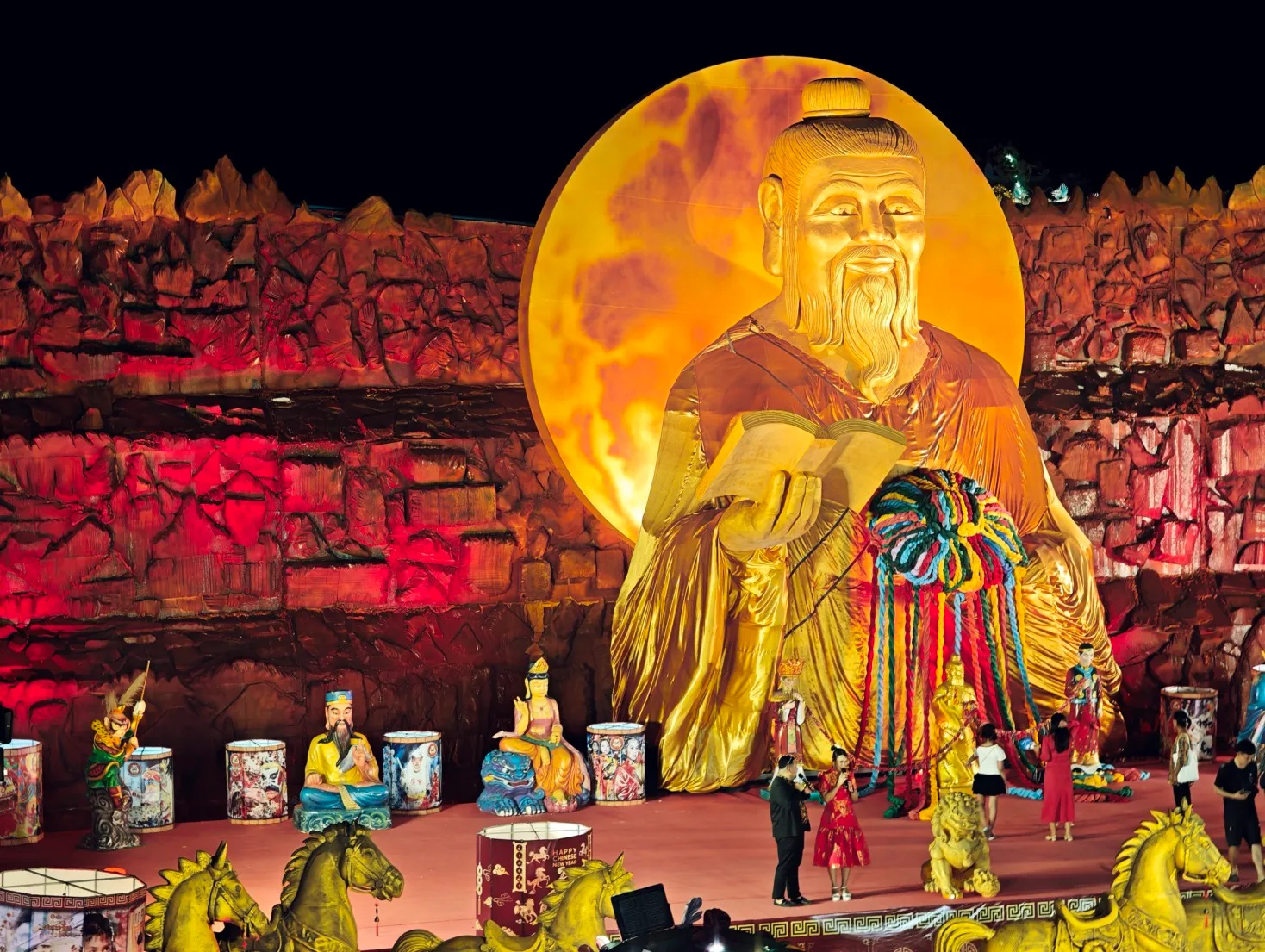
When you come down from the market streets to the banks of the Chaophraya, there is a giant golden statue towering above the river, a full stage behind it for singers and dancers, and firecrackers still exploding at 11 p.m., all of it built newjust for this one holiday.
The first night I went to the market, Mae Oh told me I had to get a Chinese dress. I did. I bought a blue one from an Auntie at the side of the road. Actually, I’d been meaning to buy one myself before she said anything, basically all of my classmates and friends had already bought theirs already, so I just went along with it.
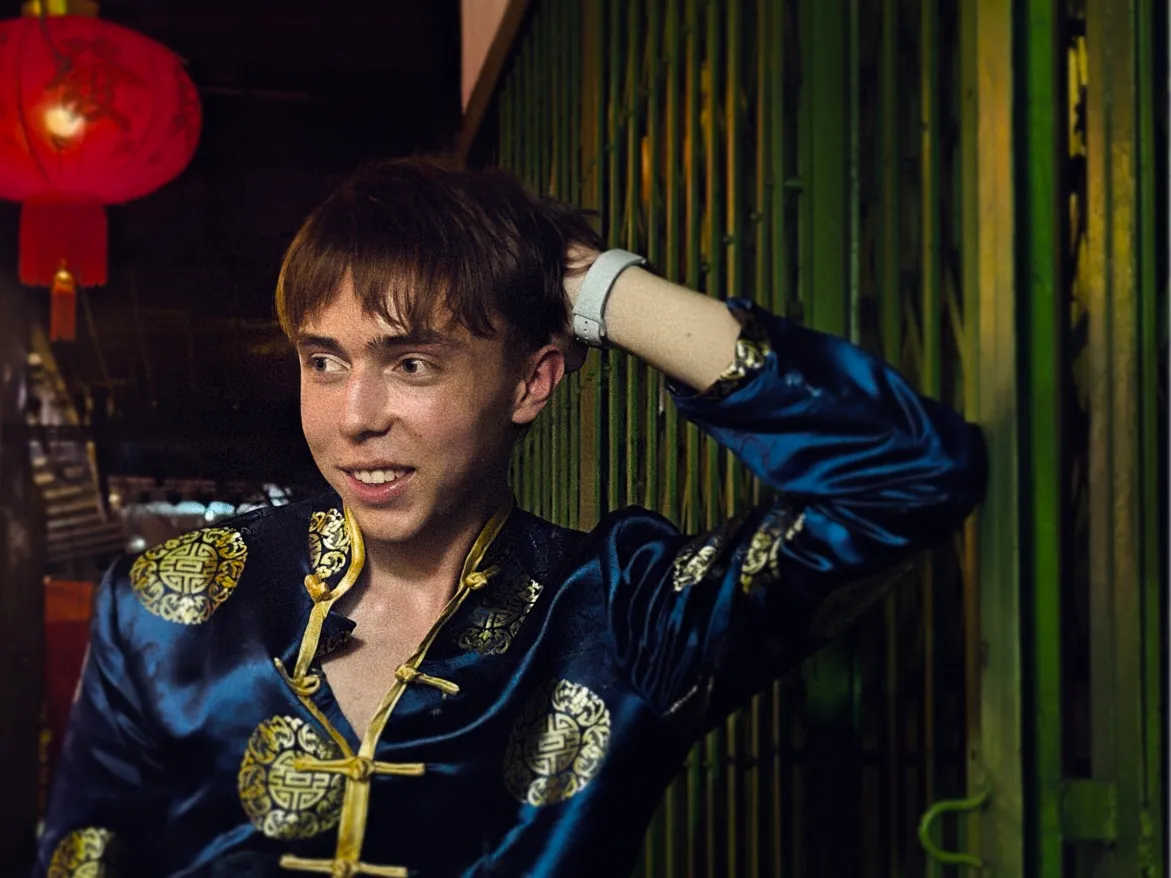
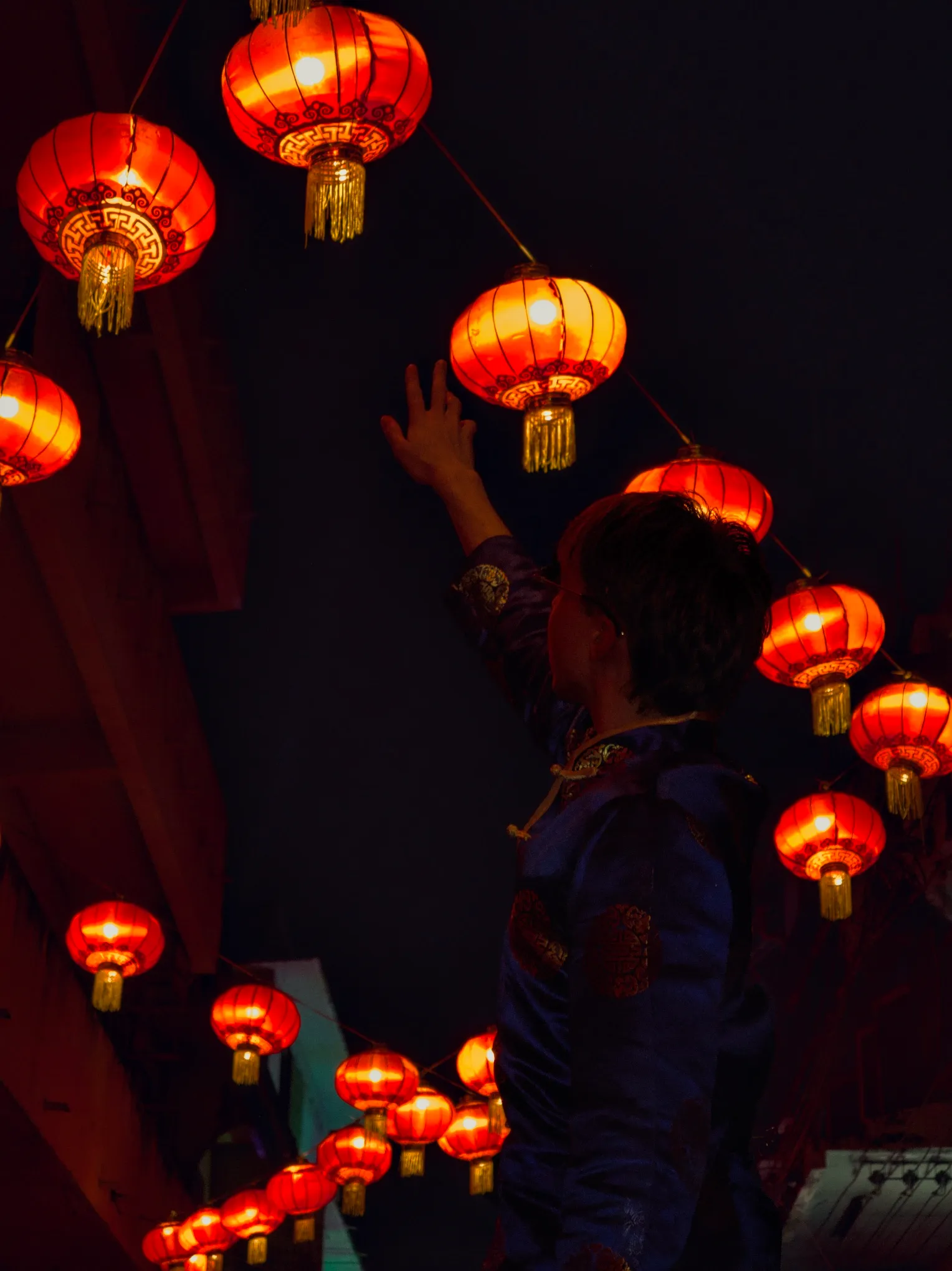
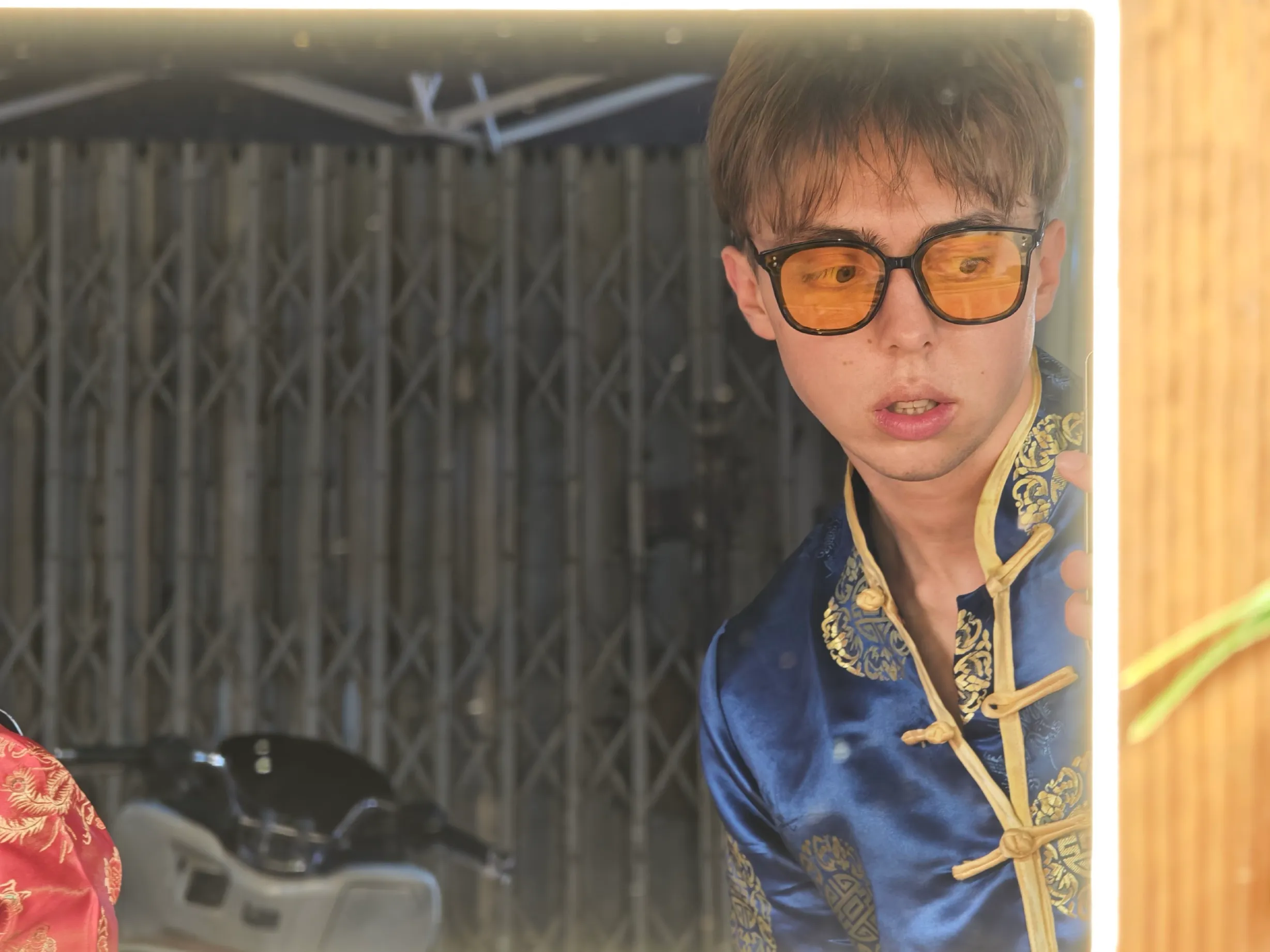
The first night, I took a lot of pictures, and made a pretty good IG post with the ones I liked best. Not that I have a big ego about posting pictures, but so many people saw my post (mostly thai people) that I unlocked a secret analytics dashboard in the app. Call me an influencer now lmao.
So yeah, I think the pictures here describe anything better then I could. Over the week or so we had the market open,I kept going back anyway: one night with Mae Oh and the family, another with friends from school, and another with just one friend, because it felt ridiculous not to make the most of something this big. Suprishgly, not all my frinds here feel like that. “Yeah, I dunno I alaready went last year.” one guy told me.
Oh, yeah, and one thing I haven’t mentioned yet: right next to the main temple in Nakhonsawan, they set up a giant wooden box. From outside You could hear so much rattling and scheetching, I assumed it must be a roller coaster inside, or some kind of sick gravatron. Wrong, klimb up to the top, and it’s people on MOTORCYCLES who were on on the inside walls. Just, that was one of the carnival games. At a temple. I’ll just let the video speak for itself honestly.
motorcycles cars
The morning parade was the last thing I did, to end the festivities. My friend from school invited me to come with her family early in the morning to watch. The parade ran for three hours. Hundreds of people dressed in Chinese clothes walked the streets with gongs, cymbals, and pots to bang on, not just walking down the street, but going into Every single business along the road, one by one, and banged out all the bad spirits from the previous year. Every five minutes, someone would set off a giant string of firecrackers. The red paper shreds from the little explosions littered the entire street like confetti.
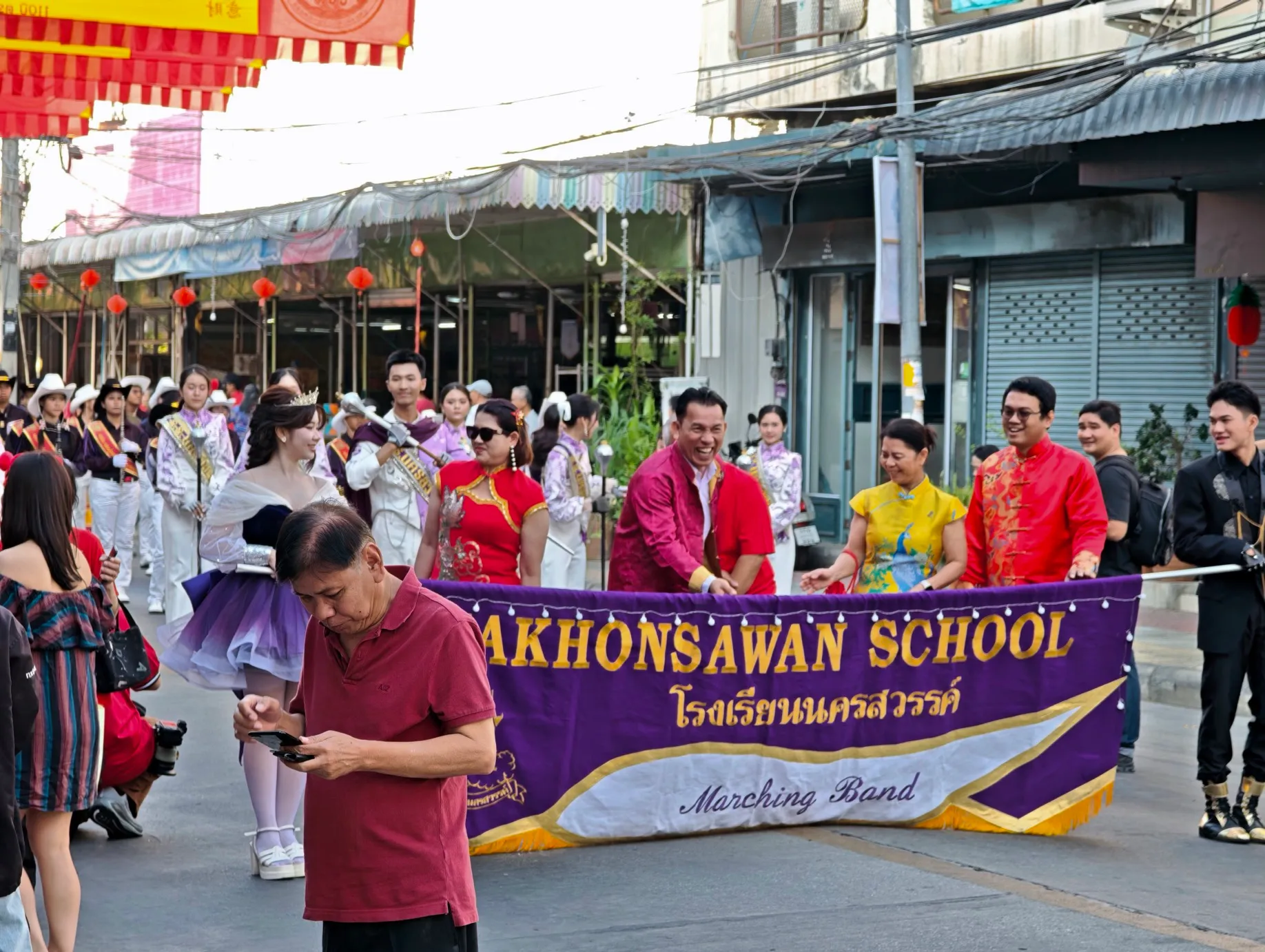
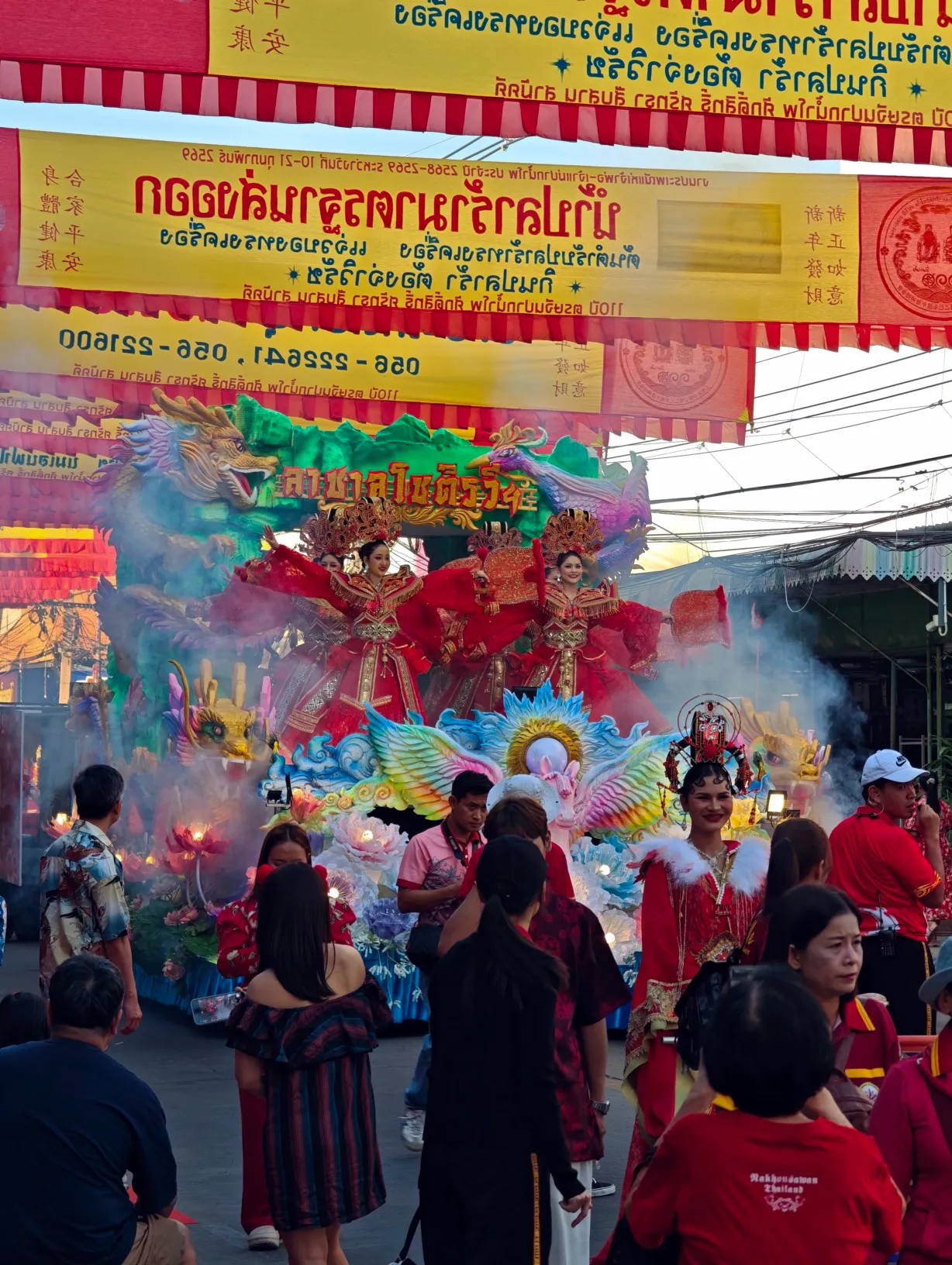
The parade ended with a giant golden dragon coming through at the very end.
So yeah, I’m not sure exactly how to describe the festival as a whole, but by the end of it I’d gone so many times it stopped feeling like something I was observing. That might be the best way I can put it.
Democracy Season
Alongside the Chinese New Year, this month marked another interesting event for Thailand. Earlier in the month, we had a national election. That’s the starting point, but actually, I think the larger story on Thai politics is, really quite interesting. Especially compared to the American government system, there are quite a few things I think people back home would find surprising. So I’ll try to lay out that conflict as clearly as I can, based on what I’ve observed while living here.
This section of my writing is not available in the Thai versions of my blog, by the way. I’ll explain later.
To understand this month’s election, you first have to understand how the Thai political system works, or more honestly, how it often fails to work. Since WWII, the Thai government has seen as many as twenty military coups, including most recently in 2014 and 2006 when the militaries successfully overthrew the government and wrote a new constitution. That constitution is the one still in use today, but frankly speaking, it’s not very effective. Right now unelected senators in the government have the power to appoint the prime minister, and along with other issues, basically all parties agree the constitution is a mess. After this election’s referendum, the constitution is now set to be rewritten, though it is still far from clear where that process will lead.
Beyond just the government structure, even within the framework we have today, things aren’t exactly consistent. We’ve had three prime ministers in the past three years, plus an active war with Cambodia. From an outsider’s perspective, and from the perspective of many young Thai people too, the system looks broken and overdue for reform, even if daily life feels less bleak than that political picture suggests. In the long term, stable leadership is definitely required for the health of Thailand’s economy and people, but in terms of the impacts on daily lives, the military coups and power struggles at the top have much less effect on the daily life than you might expect. The majority of Thai people don’t pay taxes or interact significantly with the government. As the nation’s largest employer, even through massive changes and constitutional reforms, the Thai bureaucracy has largely chugged along unchanged. The ability of the government to get things done at the local level is largely unchanging. The monarchy is another major part of the picture: regardless of which government is in office, the king remains a central symbol of the state and a force that shapes how many people understand Thai politics.
So that’s the background. What actually happened this month? The election on February 8th was not scheduled. The election grew out of an unusual deal between conservative and progressive parties: Anutin Charnvirakul, a billionaire conservative leader, would become prime minister, but only if he later dissolved parliament and called elections tied to constitutional reform. He did so in December, leading to the February date for elections.
Voters across the country were handed three separate ballots at the polls:
- Green Ballot: To elect the local Member of Parliament (400 total gov seats).
- Pink Ballot: To vote for a political party’s national list (100 total gov seats).
- Yellow Ballot: A national referendum asking voters if they agreed that a new constitution should be drafted.
Thailand may have around 57 political parties, but in practice power still narrows quickly at the top, so many similar parties end up cutting deals with one another just to stay competitive. For most purposes, there are only two major parties that are worth knowing.
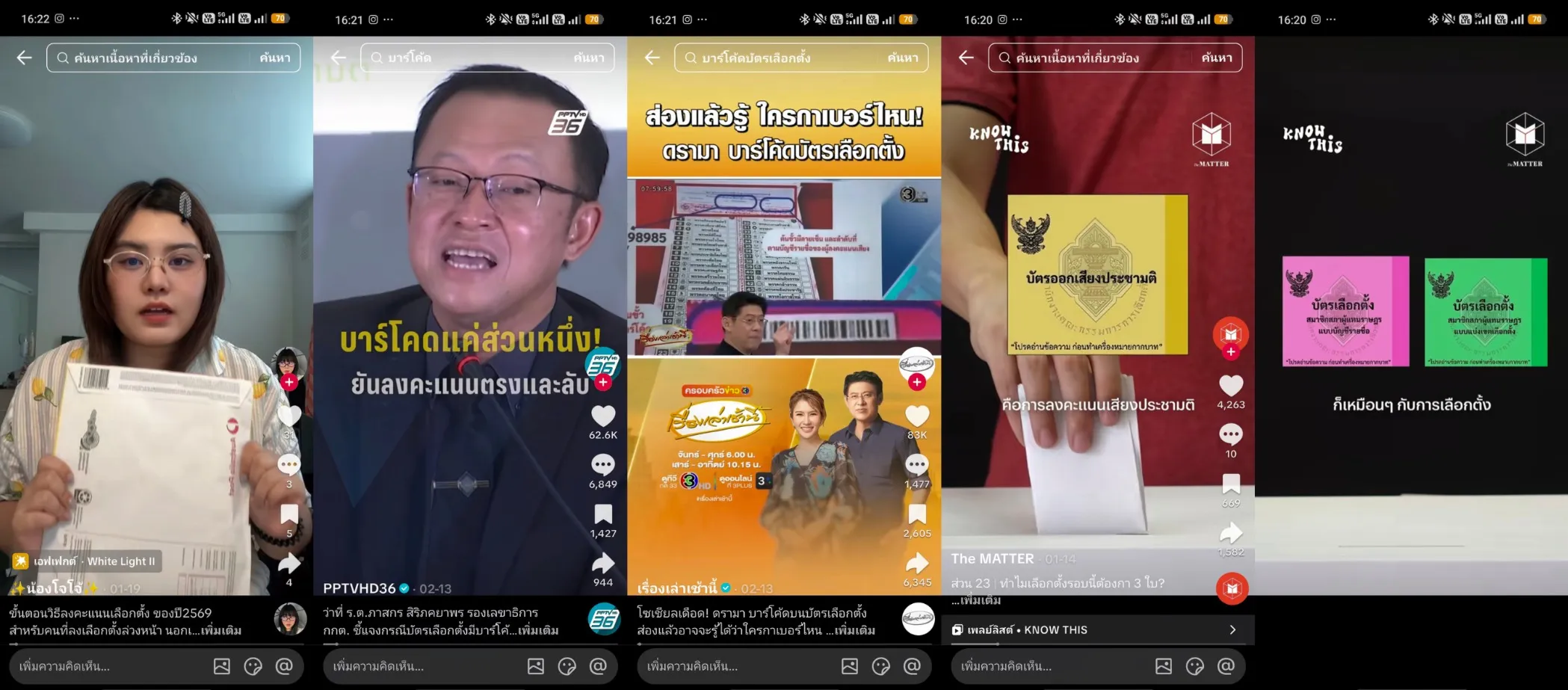
Anutin’s party, the Bhumjaithai Party, literally “proud heart of Thailand party,” the party of the prime minister, is Thailand’s conservative voice. It is a different kind of conservatism than the American version: Bhumjaithai is generally more centrist in policy, and its core message is to preserve the status quo, avoid sweeping reforms, and protect Thai cultural values. This is the party my host mom supports. We talked about this together the night after the election. “I don’t really know how I feel about Anutin,” she told me. “I really don’t think he’s proven he can do anything yet.” That being said, she still voted for Bhumjaithai. “Young kids no longer respect the monarchy here in Thailand,” she said. She feels that her choice protects Thai culture and rights, which is the most important thing in her mind, even if she is unsure about Anutin himself. This is not an uncommon feeling either. As I’ve described before, Thai people have an immense amount of cultural pride, and it’s easy to pick Bhumjaithai when you feel like that. In Nakhonsawan, all but one of our parliament seats went to Bhumjaithai, except for one, which went to another center-right party.
I can understand my mom’s choice. Many of my friends at school and younger people, however, cannot rationalize it. The following quote is from one of my best friends at school. She posted this to her Instagram story on election night after the results came in, resulting in a surprise win for Bhumjaithai. I think this quote describes the frustration young Thais feel very well.
When structural failures are easily overshadowed by immediate results, it reveals that our political standards are fundamentally too low. Anchoring ourselves to the same old choices and expecting different results is not a sign of stability, but a refusal to learn.
Making room for new political parties is not inherently a risk; rather, it is a test of whether our system is still capable of progress. We need to question the old powers, not blindly protect them just because we’re used to them.
Politics that shuts out new choices always ends up repeating the exact same problems. If we lack the courage to choose a different path, we have no one to blame when our politics remains completely paralyzed.
My friend cast their vote for the People’s Party, Thailand’s most progressive and popular option. The People’s Party’s predecessor won a remarkable victory in the last election, only to be blocked from taking power by the military-appointed Senate and later banned by the courts over its calls to loosen restrictions on speech about the monarchy.
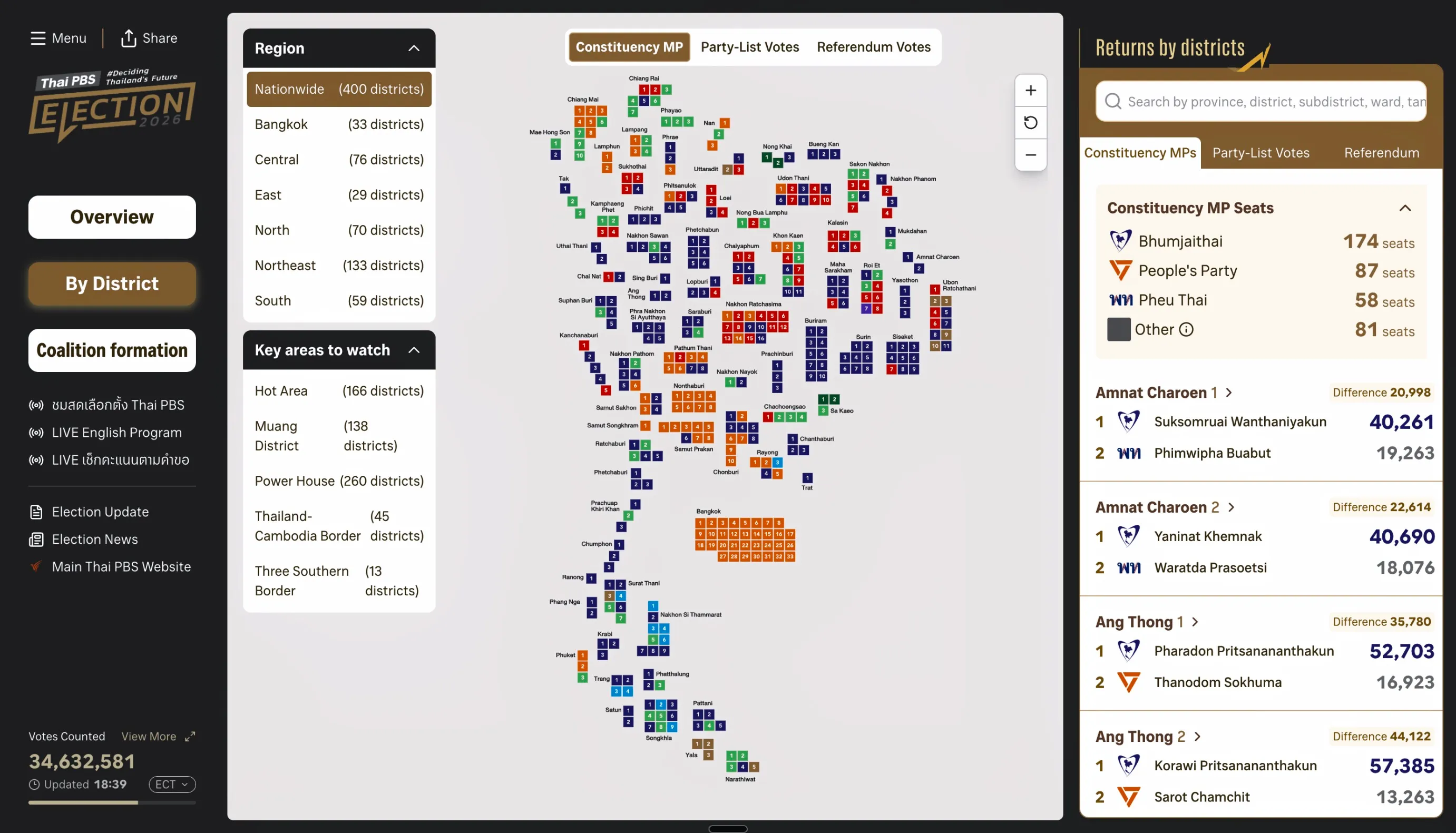
By popular vote, the People’s Party is still first. In Bangkok, they swept every single seat. That popularity comes from promises of education reform, bureaucratic overhaul, and economic development, even if those promises still have not translated into governing power. Unfortunately for the People’s Party, like my host mom described to me, many of their statements on the monarchy and Thai military are deeplyunpopular with rural and older voters. The modern iteration of the political stance has largely softened or walked back these claims, but in the face of the ongoing war with Cambodia, it’s not an asset to the sense of national pride.
One part of Thai politics that is impossible to ignore is freedom of expression, precisely because it is something most people will not discuss openly. Thailand has some of the strictest lese-majesté laws in the world. Some of my friends won’t even talk about politics when in public. At the Chinese New Year, I spent one evening walking around with my friend Smart. Above the entire market, a massive 7-story tall picture of the King hangs above the street. “Wow,” I said, “what an impressive portrait.” “Shhhh!” he told me. “You can’t talk about that here.”
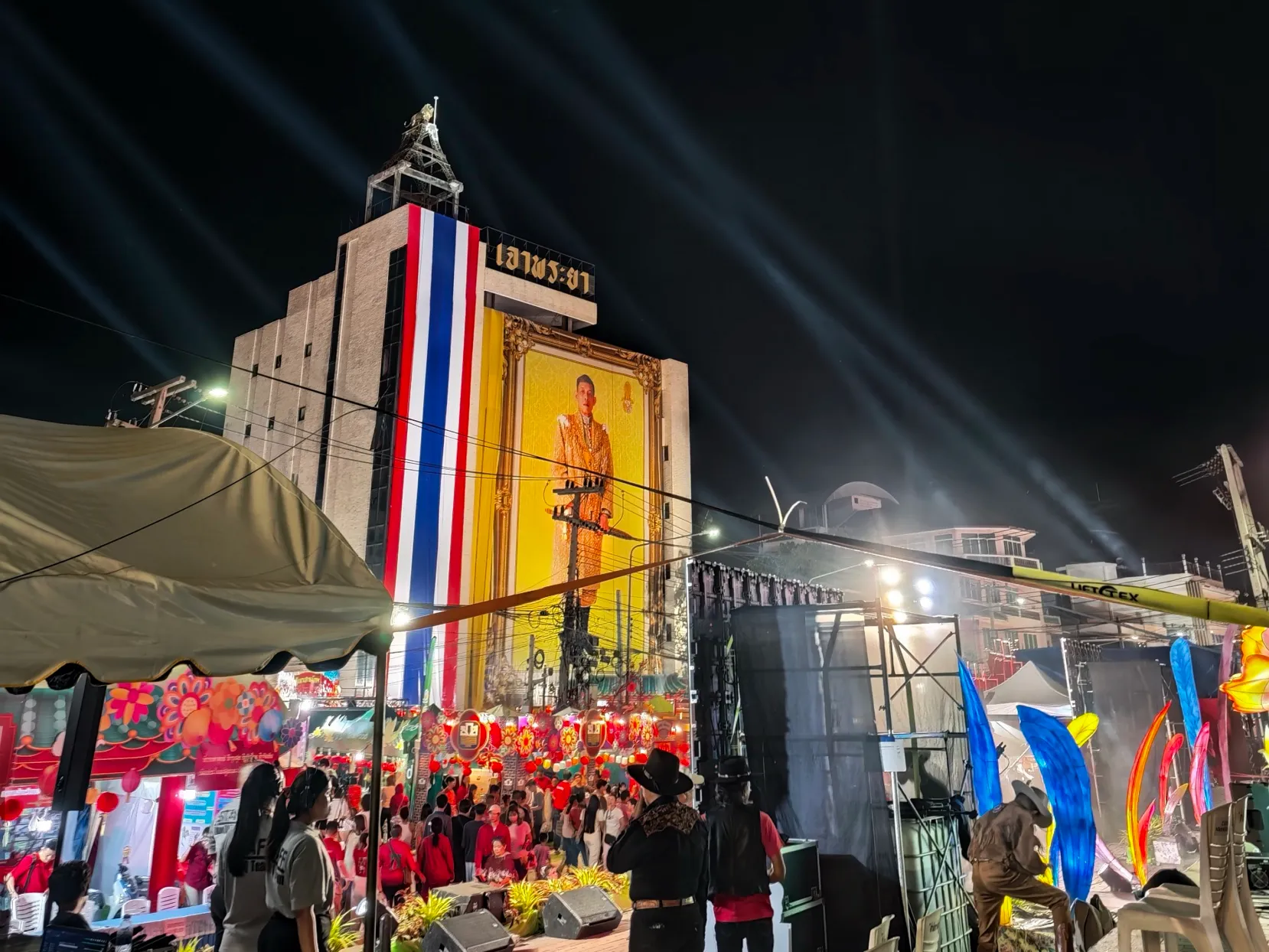
Smart is also largely correct. You really can’t talk about these things, not online, and not in public. Since 2020 alone, thousands of Thais have been and are prosecuted for political speech, Including dozens of minors under 18 who were persecuted and often go to jail for such speech. In one case recently, a man from Chiang Mai was sentenced to 50 years in prison for a series of posts on facebook. In another, a teacher from America was sent to jail after talking negatively about the King during a class.
That climate of caution also creates a striking absence of information online; if you search Google, Facebook, or Instagram for material about the King inside Thailand, there is often far less there than you would expect. If you ask ChatGPT for information on the King, it responds, “I’m sorry, but I’m not able to assist with this request.” Even at the network level, foreign news articles, critical content, and other links literally just don’t load on any internet connections in this country. Access to workarounds is, of course, possible, but even popular options like VPNs are restricted. For me, the strangest part has been seeing that absence enforced at the scale of an entire country: the internet still works normally, but it feels noticeably emptier in places where political criticism would usually exist.
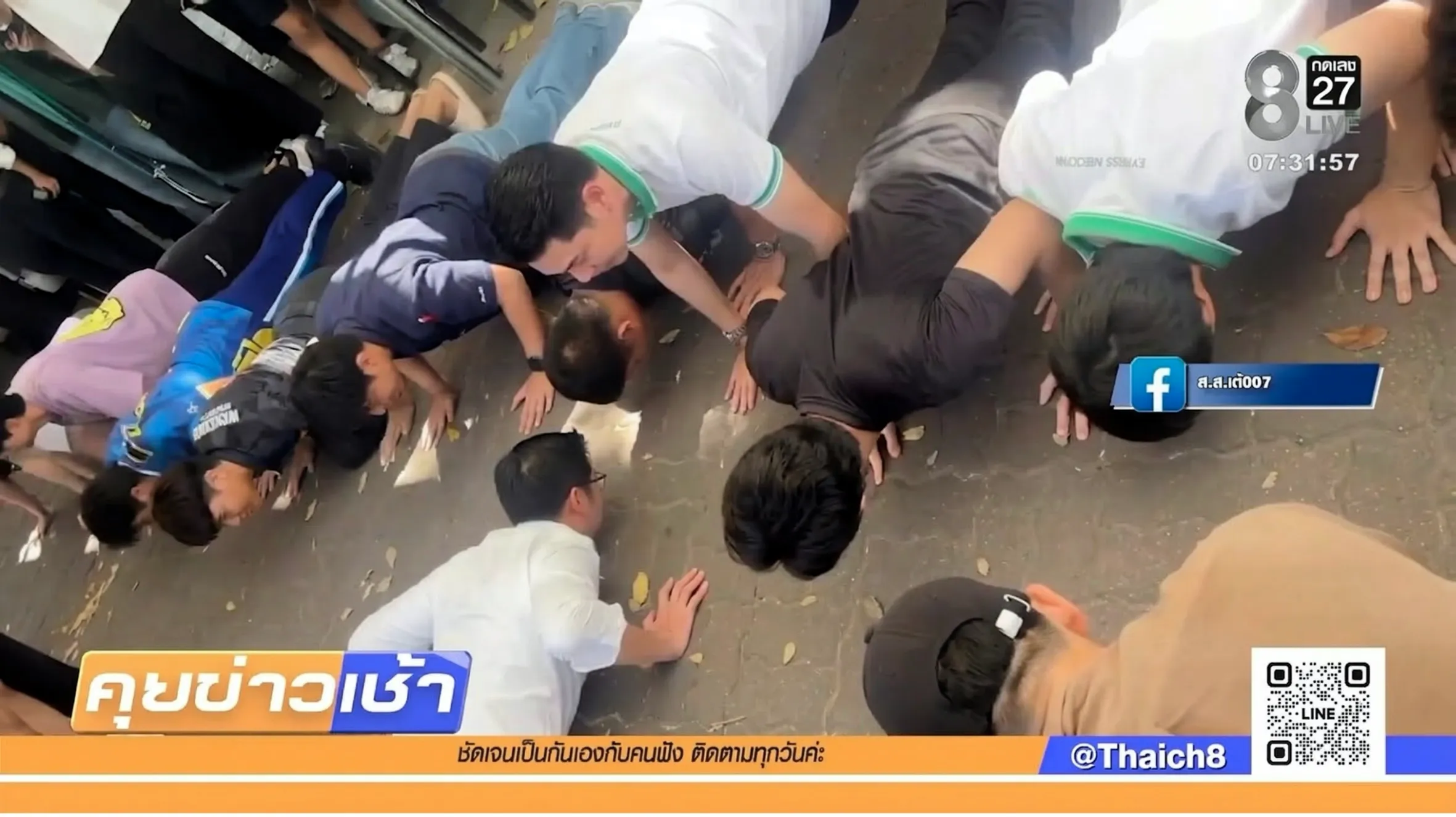
Oh, as one final note about this whole election, there is one other figure you must know about in Thai politics: Mr. Mongkolkit Suksintharanon, better known, somewhat affectionately, as P’Tae. Most popular among Gen Z, P’Tae is probably the most notorious figure in Thai politics, perhaps even better known than party heavyweights like Prime Minister Anutin. Well, how could that be? you might ask. Let’s take a look at some of his most popular campaign promises during his run for representative.
- Central to P’Tae’s vision for the country is to establish a new government ministry dedicated to sending a Thai spacecraft to Mars and Venus within the next 12 years.
- He pledged to purchase at least 10 nuclear warheads from the United States to “boost national security.”
- A proposal to fund scientific research efforts for dinosaur cloning research eventually with the goal of opening a theme park in the northern Isaan province.
- A 50% government-subsidized discount for Thai citizens visiting massage parlors.
- Giving 36,000 baht per household in community funding (which, unfortunately, critics ended up tearing apart based on the realities of budget spending).
- Requiring push-ups as a daily national activity to build a physically stronger populace: 175 each day for the men and 115 for women for all students and government employees.
- And perhaps the most controversial of all, in a progressive step for women’s rights, a new policy allowing women to have up to four different husbands under the law, making up for a history of wealthy lords in Thai history taking multiple wives. “Empowering women is important,” he said in a heartfelt post on Instagram. So true!

The End Of School
And just like that, my time at Nakhonsawan School was winding down: after the Chinese New Year break, we jumped straight into the last few weeks before exams and summer vacation.
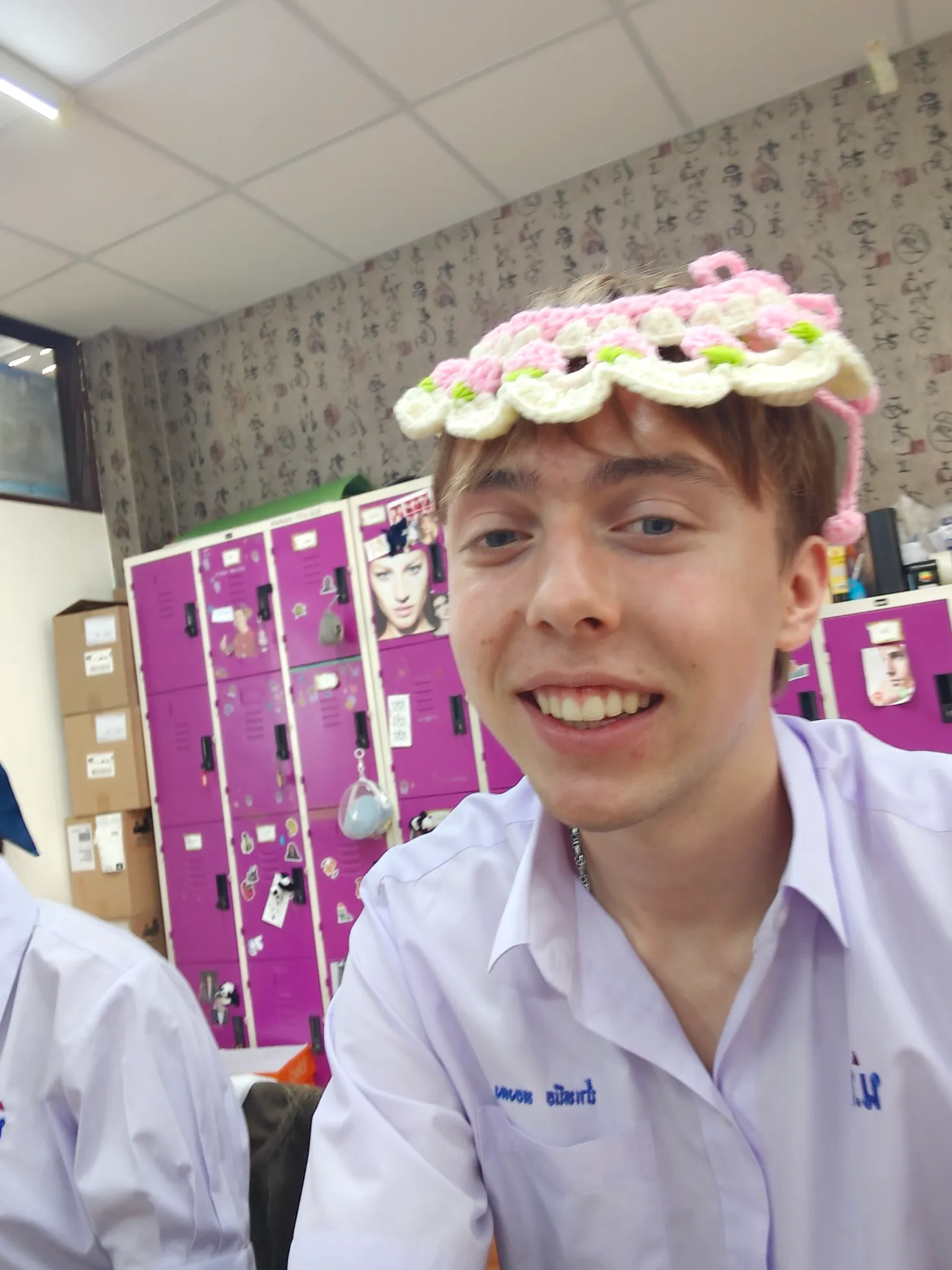
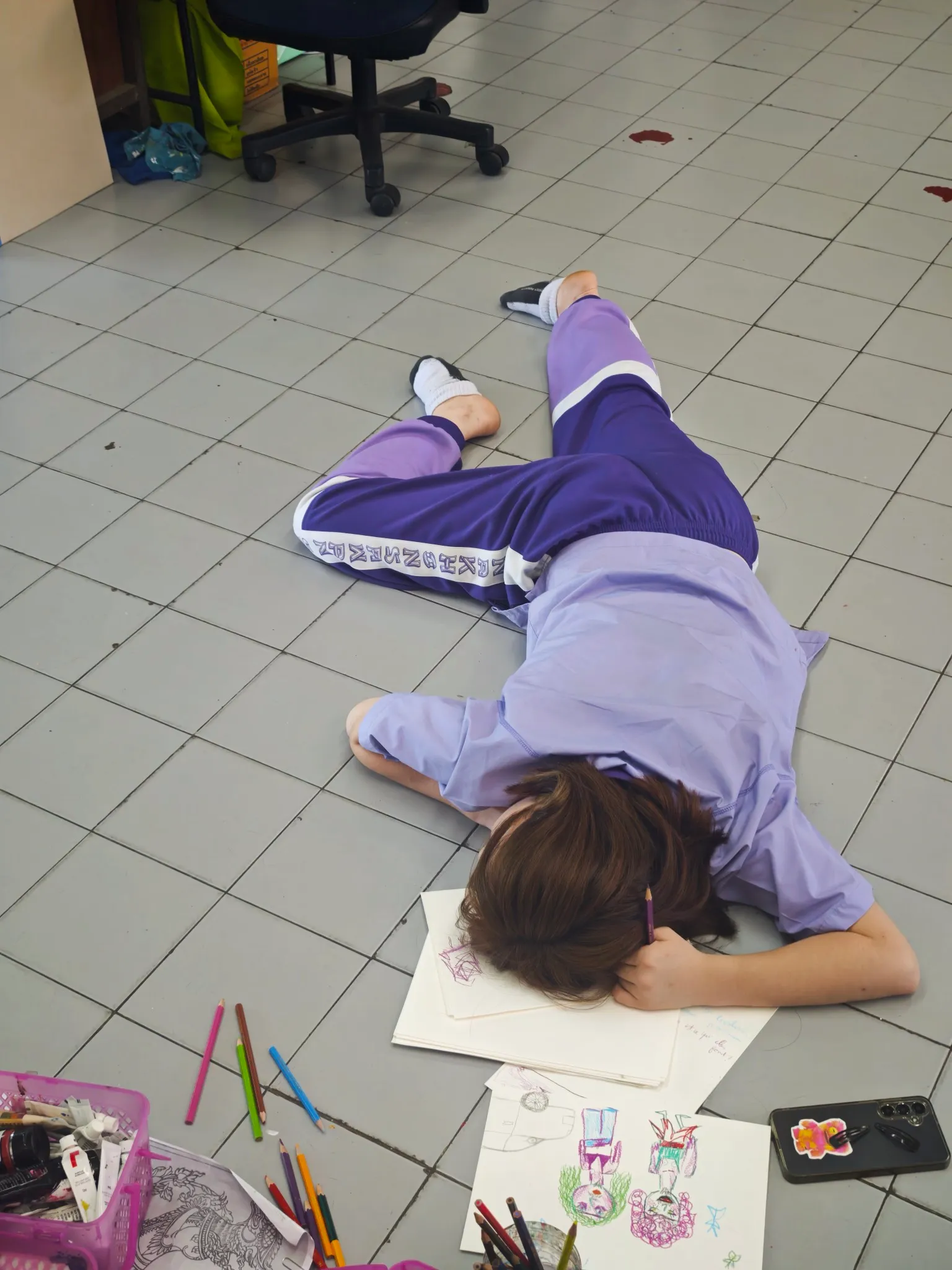
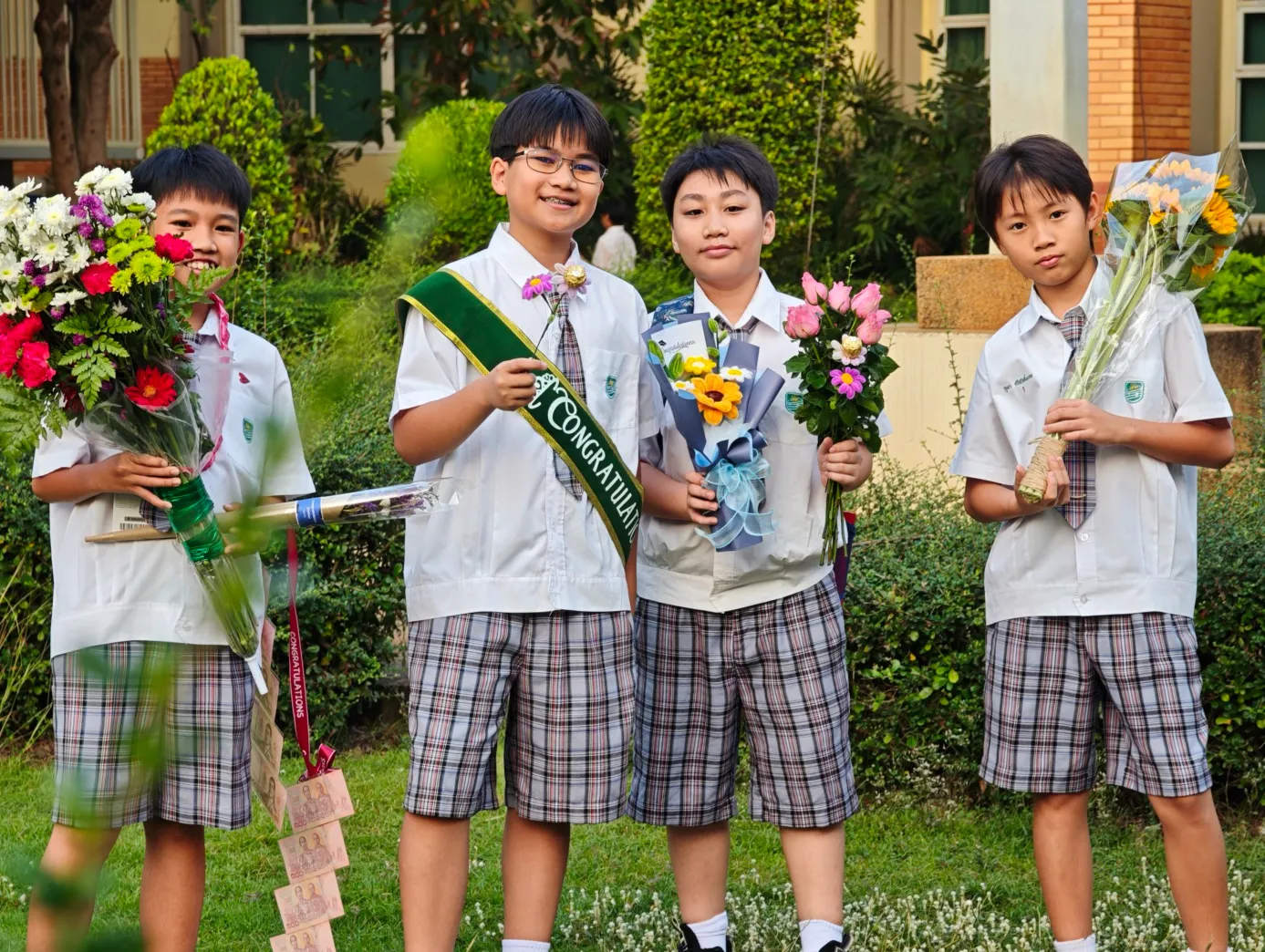
The beginning of the end stated with my youngest host brother, Tonboon, who just graduated from Phrathom (elmentary/middleschool in thailand). The night before his graduation, my mom and aunt went to a flower shop and got bundles of various assorted flowers. Then we ordered boiled fish with steamed vegetables and a clear chili juice for flavor. We spread all the flowers out on the floor of the living room, and spent the evening preparing them into bouquets made out of umbrellas. The next morning, we woke up early at 6 a.m. and went to the school to take pictures.
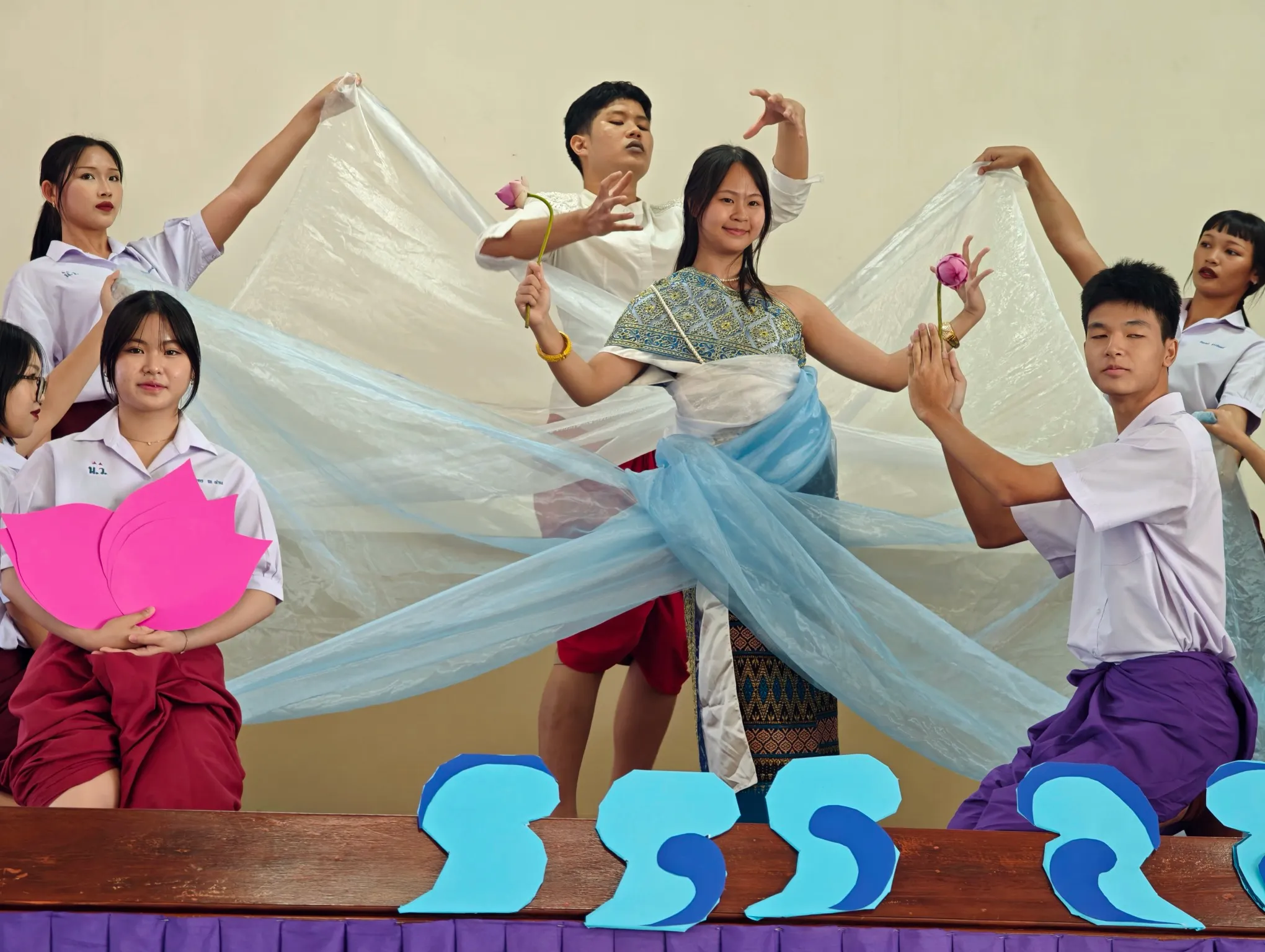
In school, there’s of course a bit of drama as people figure out the end of the year, but I’ll just leave that story for you to imagine. On the 28th, we took the bus down to Bangkok again for International Rotary Peace Day. Ironic, we thought to ourselves. It was the same morning Operation Epic Fury started in Iran. My friends and I from Nakhon Sawan snuck out of the meeting hall and went to a 7-Eleven to buy food before sitting on the top floor at the Bangkok university building. Later, I signed up for the selective service system.
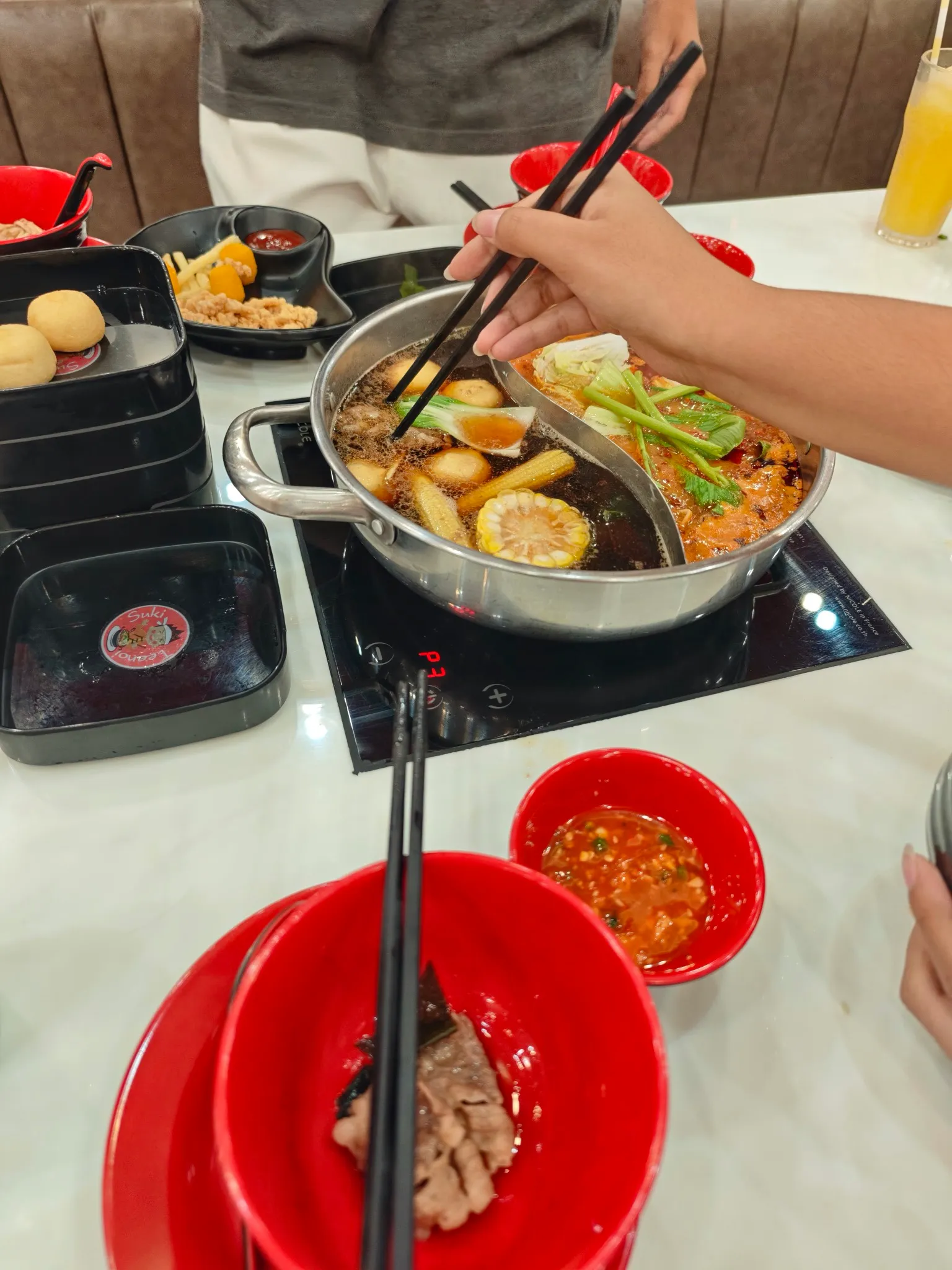
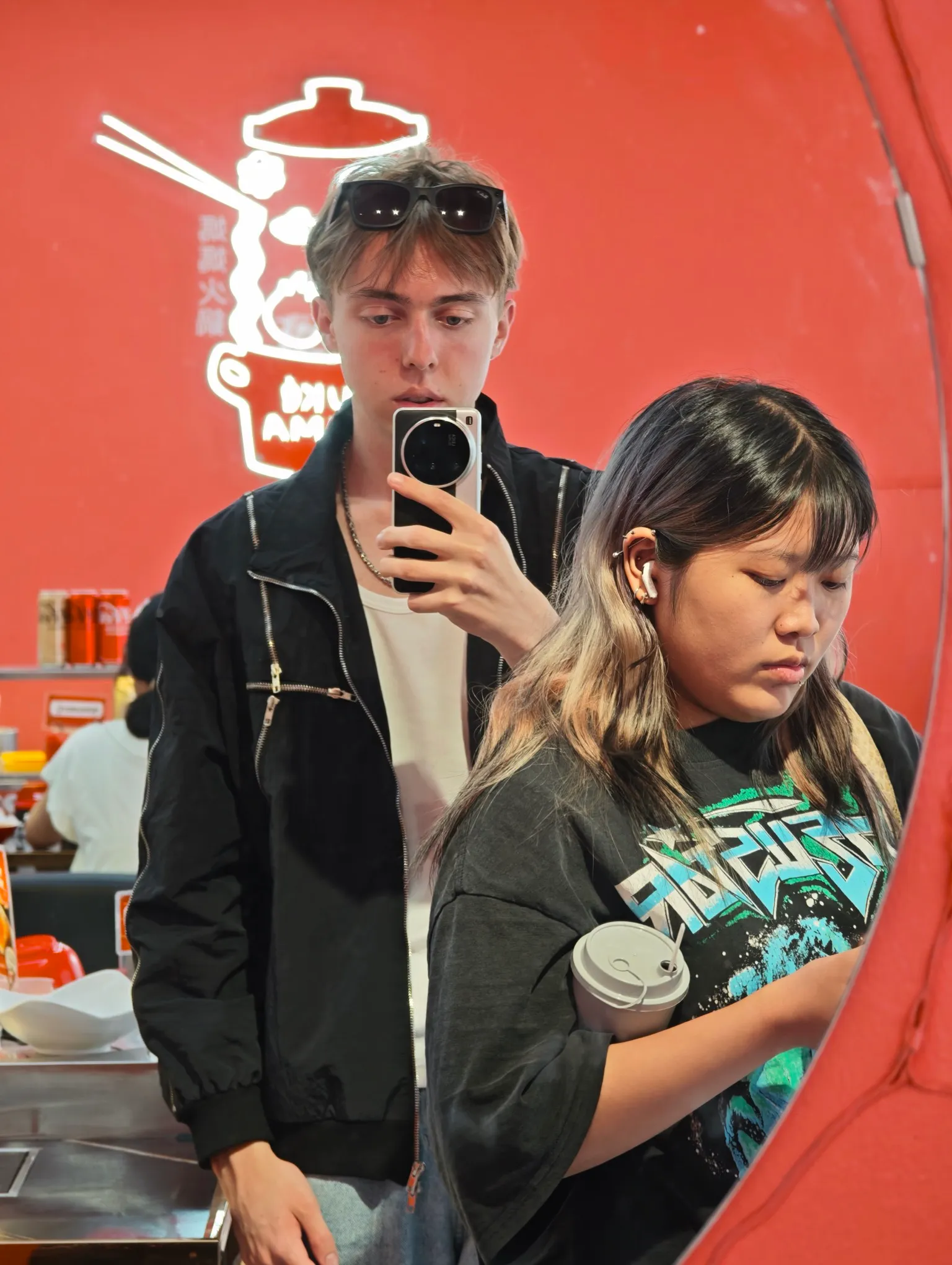
Oh, and one final thing. I think I’m getting addicted to eating hot pot. I swear I’m going like every other day with my friends. It’s not good for my wallet either! It’s like the most expensive food in Nakhonsawan. Uh oh. If only you could taste it though. My favorite restaurant has a conveyor belt, and you can just take whatever you want to eat off the belt. Aroi mak, as we say in Thailand.

So that’s February: school is out, summer break is here, and I fully intend to enjoy it.
Best, Declan
Comments
Sign in to join the conversation
Loading comments...
No comments yet. Be the first to comment!